A photo licensing agreement is a legal document that gives someone the right to use a photograph under certain conditions. It is also sometimes referred to as an image licensing agreement or photo usage rights agreement.
The person granting the permission (the licensor) holds the copyrights to the photographs. The person requesting authorization to use the image (the licensee) gets limited photo usage rights. The terms of the agreement determine the extent of these rights.
In a photo licensing agreement, it needs clearly to outline where, when, and how a photograph can be used. Doing so helps protect the photographer as the owner of the photos and provides legal clarity and protection around their use.
Typically, photo usage rights can cover the following aspects:
- How the image can be used (commercial, editorial, personal)
- Where it can be published (online, print, etc.)
- Whether it can be edited or modified
- If credit is required
Sources: https://legaltemplates.net/form/photo-licensing-agreement/

This agreement helps set clear rules, prevent misunderstandings, and protect the photographer's work from misuse. It also ensures that he/she gets paid for his/her work fairly.You may need a photo licensing agreement in the following situations:
- Selling or licensing pictures for commercial use
- Delivering photos to a client through a freelance agency
- Preventing unauthorized use, like being shared or copied without your permission
- Offering stock photos
Sources: https://legaltemplates.net/form/photo-licensing-agreement/

Photo licensing agreements are used in various industries to define how images can be legally shared, displayed, or sold:
Retail: If a business or an individual wants to put the photo(s) on merchandise, posters, or prints, a licensing agreement can set rules for how and where they can sell those items.
Advertising or marketing: The photographer can set clear rules about using his/her photo in ads or on websites. The agreement can also limit how long the photo(s) can be used for promotional purposes.
Publishing in articles, blogs, and magazines: The photo(s) may be used to support a story in a newspaper, blog, or magazine. You can set boundaries around where it can appear, how long it can stay up, and whether you want to be credited.
Social media and online use: The photographer can use the image licensing agreement to set rules on how the photos can be used online. For example, he/she can decide if editing is allowed, whether credit is required, and how long the photo can stay posted.
Sources: https://legaltemplates.net/form/photo-licensing-agreement/

Licensing a photo is not giving up ownership. It simply gives someone permission to use the photo under certain conditions. Unless otherwise stated within the licensing agreement, the rights to the photos remain with the photographer. Under 17 USC § 102, the photographer owns the copyrights to their photos as soon as they take them.
Work made for hire: If the photographer is hired by an employer to take photographs, the employer would be the legal copyright holder under 17 USC § 102. However, if the photographer is employed as a freelancer or independent contractor, he/she usually keeps the copyright, unless there’s a written agreement that says otherwise.
Sources: https://legaltemplates.net/form/photo-licensing-agreement/

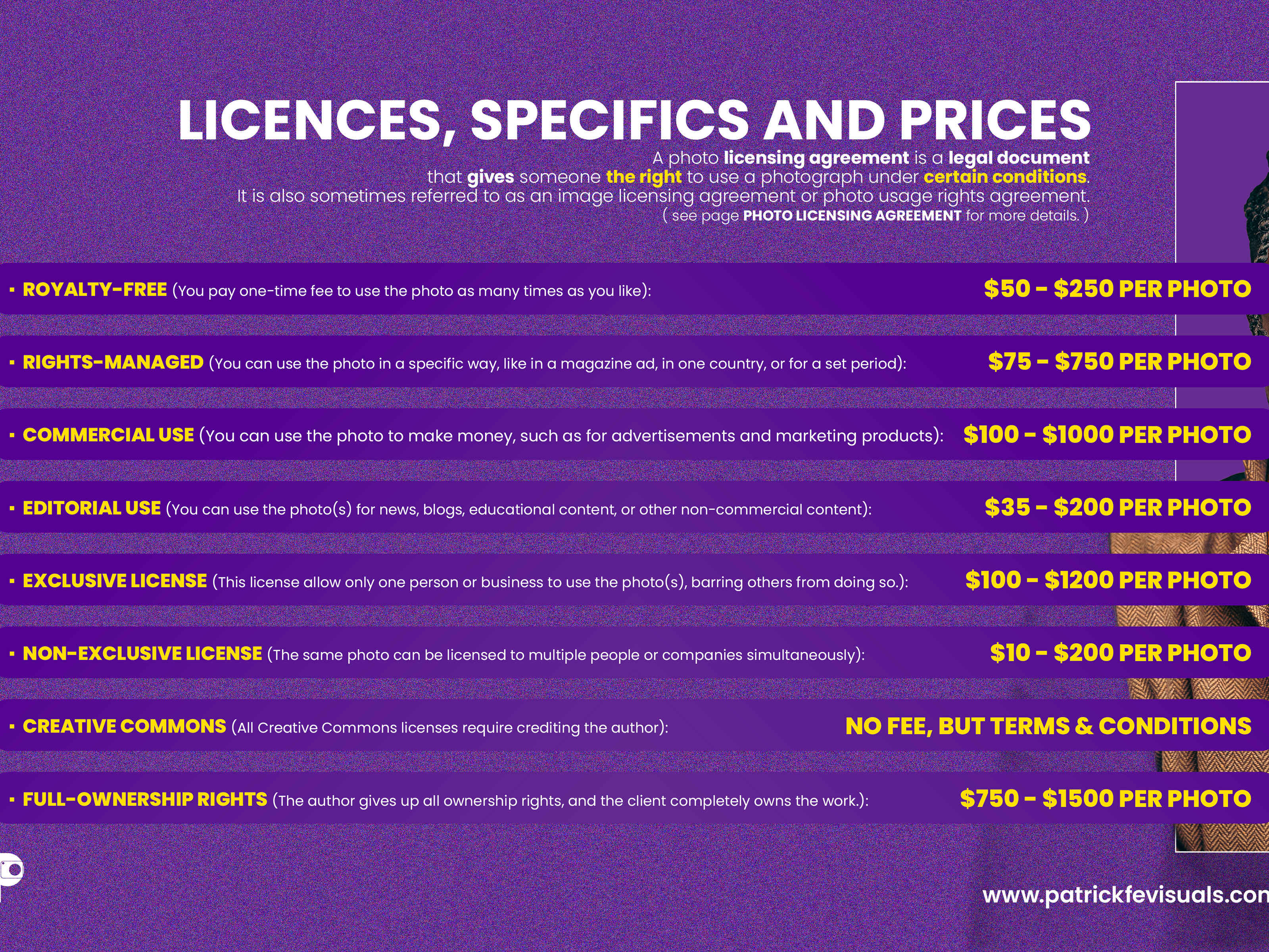
The type of license selected determines who can use the photo(s) and in what capacity. Each license offers a different level of protection, flexibility, and revenue potential.
Here are the common types of photo licenses you can get:
Royalty-free: The buyer pays a one-time fee to use the photo as many times as they like. This type of license is common for stock photography, and multiple people can license the same photo.
Rights-managed: This type gives the buyer the right to use the photo(s) in a specific way, like in a magazine ad, in one country, or for a set period. They will have to buy another license if they want to use it again.
Commercial use: The Photographer can allow the buyer to use the photo(s) to make money, such as for advertisements and marketing products.
Editorial use: The licensee can use the photo(s) for news, blogs, educational content, or other non-commercial content.
Exclusive license: The photographer may allow only one person or business to use the photo(s), barring others from doing so.
Non-exclusive license: The photographer can license the same photo to multiple people or companies simultaneously.
Creative commons: Grant the right to use the photo(s) for free, with some rules like giving credit or not editing the images in any way.
Full-ownership rights: With this license, the photographer gives up all ownership rights, and the client completely owns the work.
Sources: https://legaltemplates.net/form/photo-licensing-agreement/

Including specific terms reduces the risk of misuse and makes it easier for thw photographer to be in control of his/her work. Here’s what can be specified:
Purpose (for commercial, editorial, or personal use)
Media type (print, digital, social media)
Geographic limits (US only or worldwide)
Timeframe (one-time use or ongoing)
Modification rights (editing allowed or not)
Credit requirements (should they include photographer's name or not)
Sources: https://legaltemplates.net/form/photo-licensing-agreement/